
When we produced our first concept videos for the medical device field, the result was clean, glossy and impressive. And it didn’t work. It looked like a computer rendering, and we rejected it.
A doctor, a procurement manager or a biomedical engineer spots a fake room in a second. And once they have spotted it, they stop believing the product too.
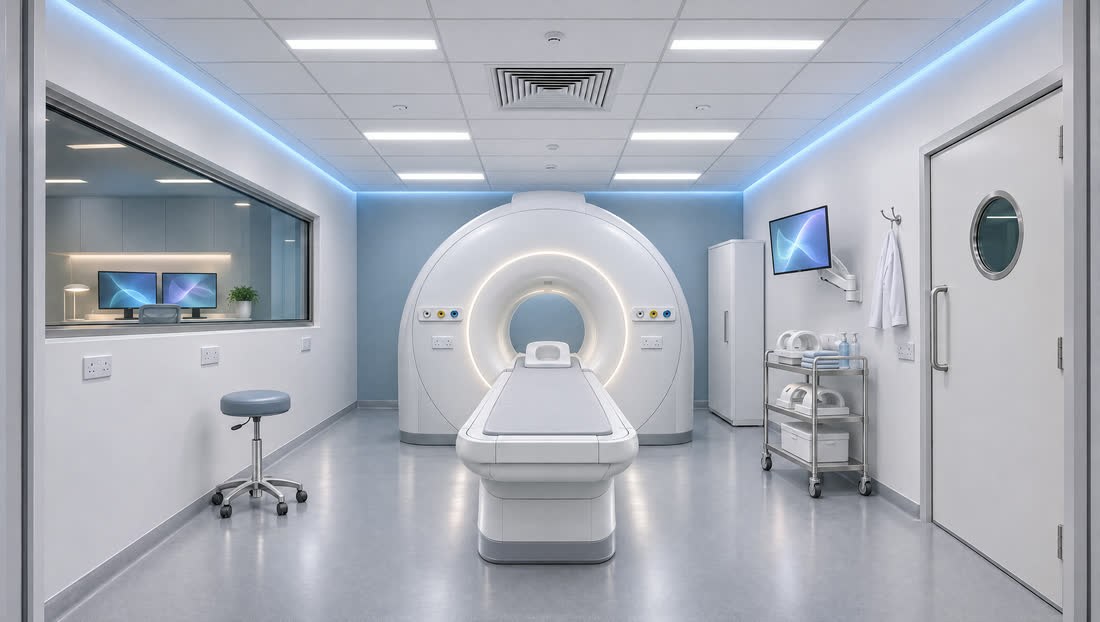
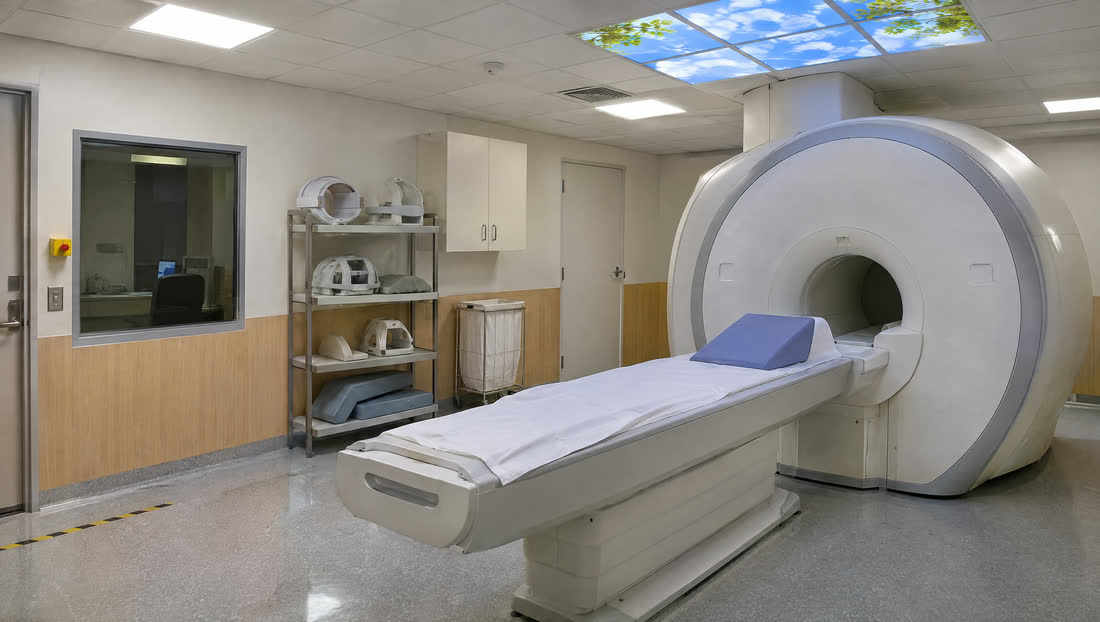
First: the version we rejected. Second: the version we approved. Same idea, a completely different look.
The five things we changed
1. Ask for a photograph, not a rendering
The difference starts with the prompt. Instead of asking for a modern, upscale medical room, we asked for a documentary photograph of a real room, as if someone on the staff had taken it. The words “premium” and “futuristic” are what produce the fake look.
2. Matte instead of glossy
Real medical equipment is made of matte plastic in an off-white shade, with seams, screws and small scratches. Not white surfaces that reflect light like a new car.
3. No light rings and no blue lighting
This is the clearest giveaway. A device with a glowing ring and a ceiling with a blue strip look like a science-fiction movie. A real hospital has ordinary light panels in a drop ceiling.
4. The everyday clutter
A real room is full of things: a shelf of accessories, a laundry hamper, a glove dispenser, marking tape on the floor, an office chair. Those details are what make the eye believe.
5. Screens switched off
A lit screen invites trouble: either garbled text shows up on it, or an image that looks like a clinical finding. A dark screen looks real, and it makes no claim at all.
The same principle inside the device
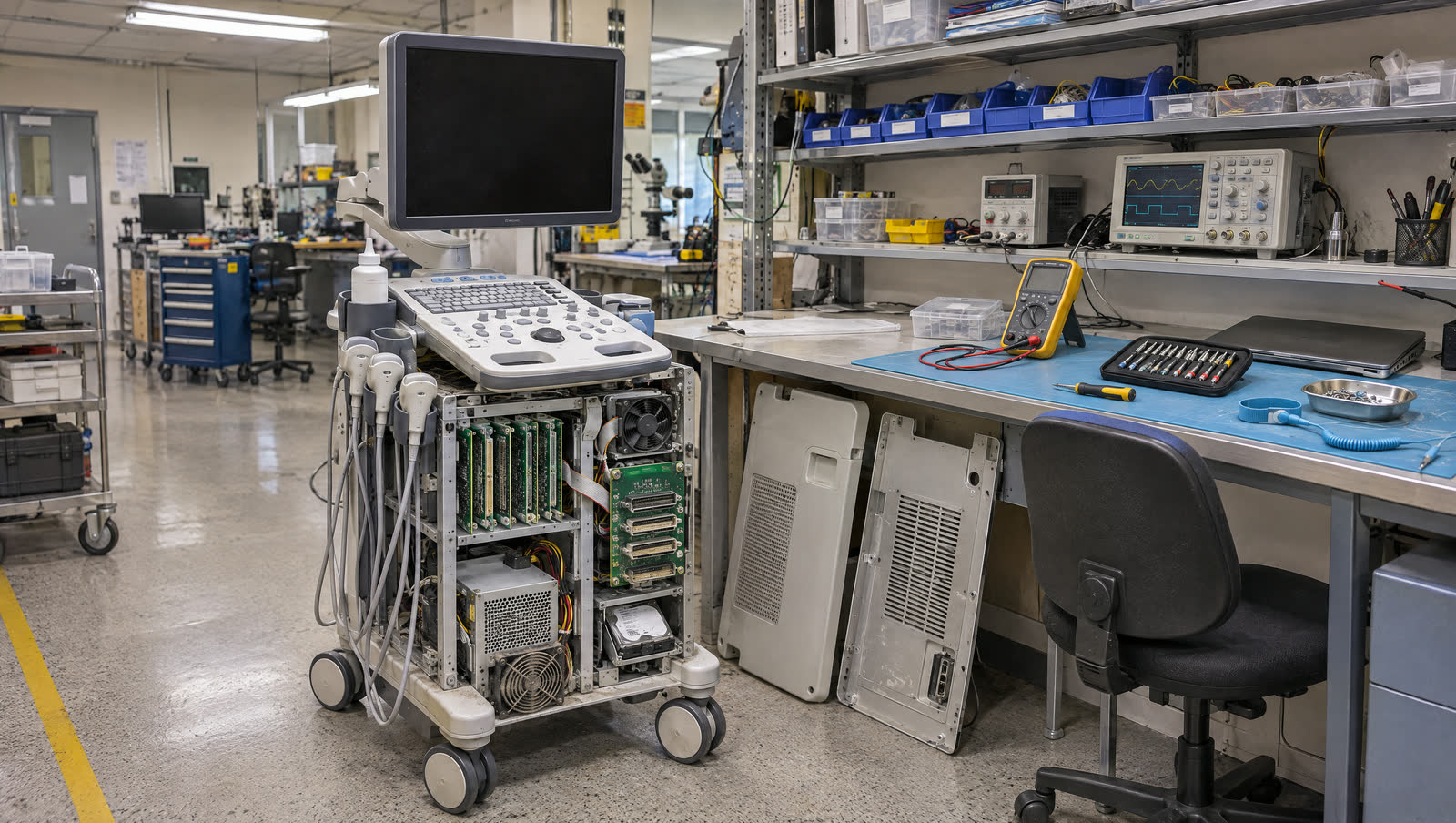
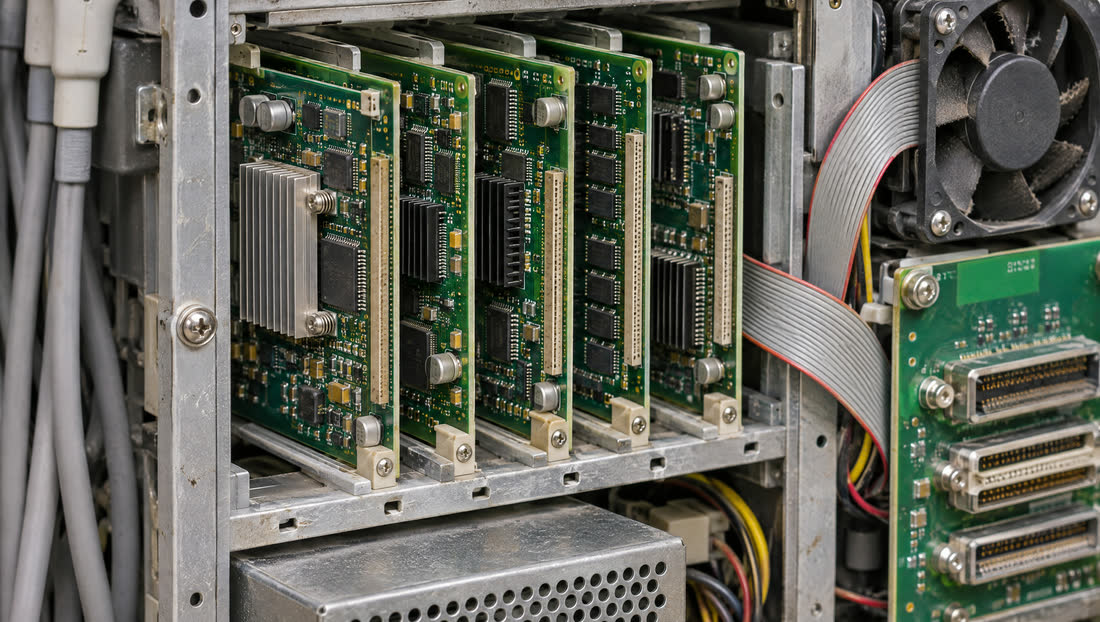
We wanted to show what’s inside a device. The first attempt was an animation of parts floating in the air, and it looked artificial. What worked: an open device on a bench in a service workshop, with the covers set aside.
And in motion too
A clip in which a device “grows” out of the floor looks magical, and therefore not credible. A slow camera move through a room that looks real holds up far better. When you need to show before and after, a simple transition between two states beats a spectacular assembly sequence.
What this means for you
The realistic look is only half the job. The other half is accuracy: in a video for a client, we work from the manufacturer’s materials, and you approve every detail. We covered that in ourguide to product videos for medical devices.
Frequently asked questions
Why do AI videos of medical equipment look fake?
Because of overly glossy surfaces, glowing light rings, colored lighting and rooms that are too empty. These are the marks of a computer rendering, and professionals spot them immediately.
How do you make an AI video look like real footage?
Ask for a documentary look of a real place, use matte materials, ordinary lighting and everyday details, keep screens off, and prefer simple camera movement over effects.
Is a realistic look enough?
No. A video for a client also needs accuracy: we work from the manufacturer’s materials, and the client approves how the device is presented and the claims before publication.
Want a video that looks like footage, not a rendering? Send us a photo of the product, and we’ll show you how it could look.
Contact us