
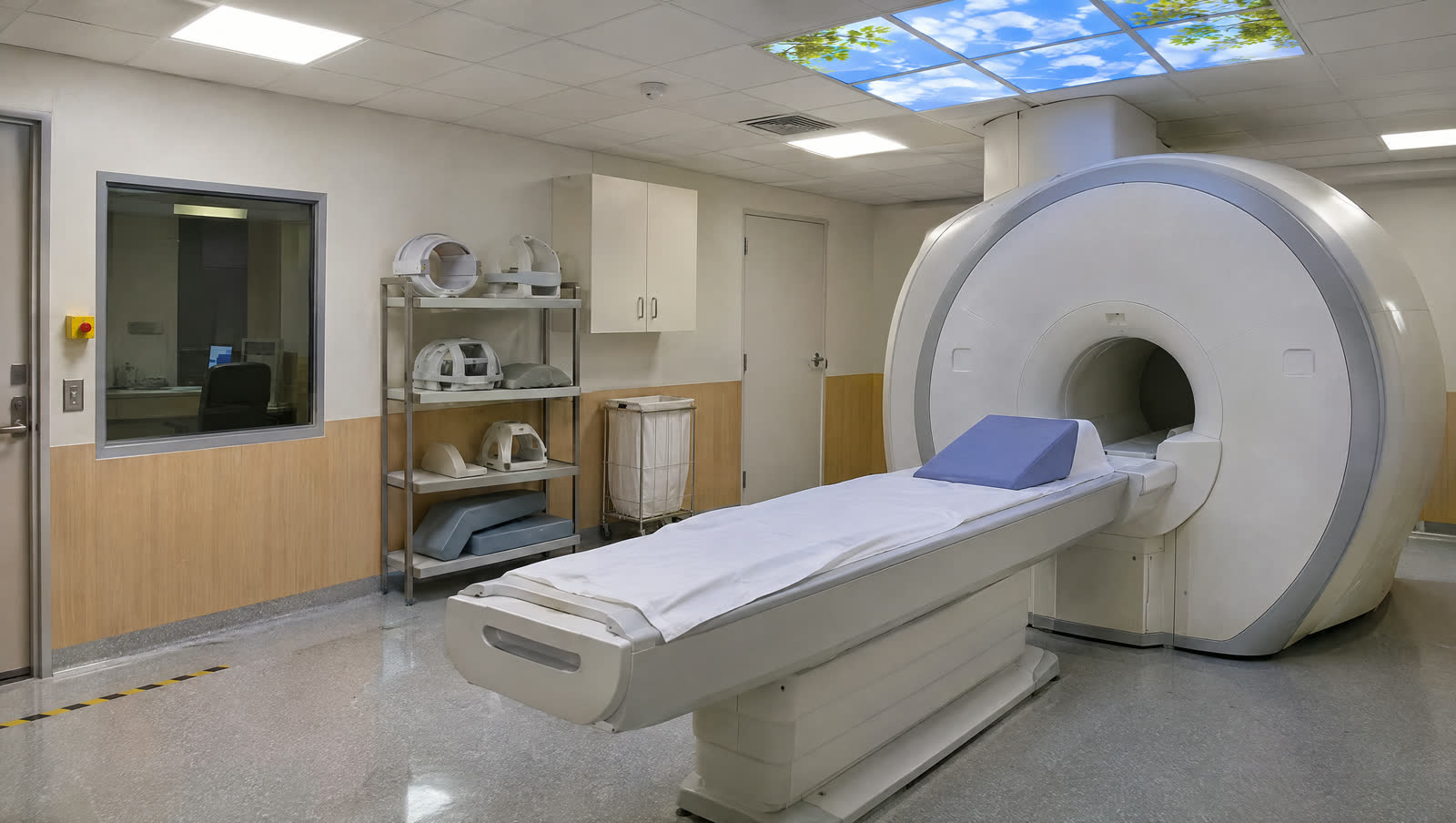
Medical device marketing lives between two pressures. On one side, the product is complex and has to be explained well: to a hospital procurement manager, to a distributor abroad, to an investor. On the other, every word is scrutinized, and you can’t claim anything that hasn’t been approved.
A good video does the first without risking the second, if you build it right.
Three types of video that work
1. The device in its environment
A hospital or clinic buying a large system wants to know how it will fit into the space: how much room it takes up, where the control station goes, what else goes into the room.
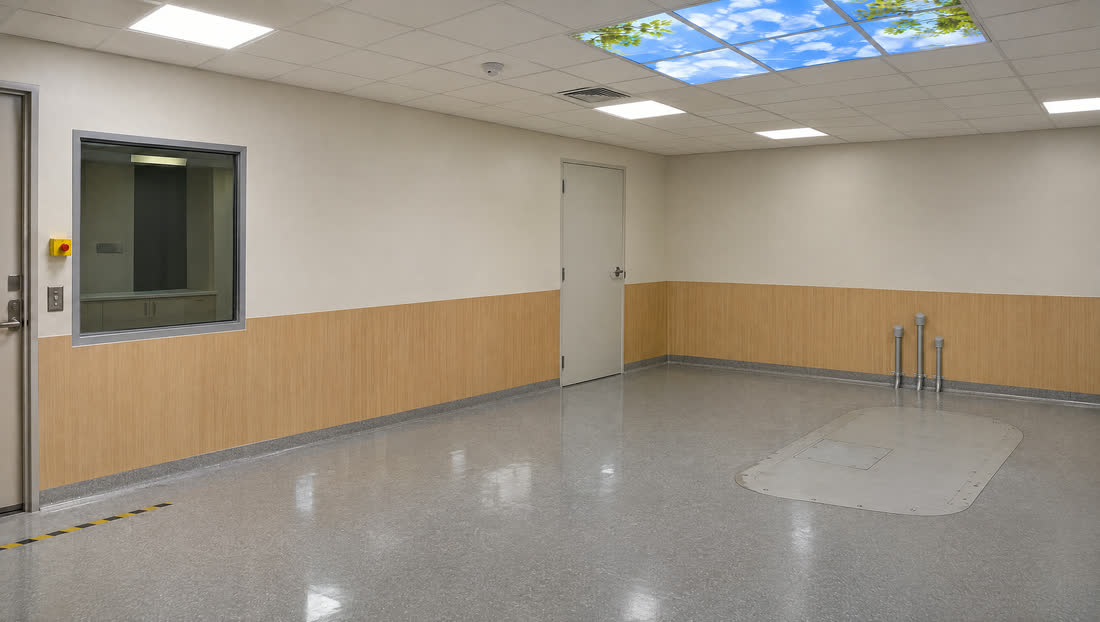
The same room, before and after it is equipped.
2. What’s inside the device
A technological advantage is hard to show in a product photo. A look at the internal components, the way a service engineer sees them, explains what sets the device apart.
3. The process the device enables
You’re not just selling a machine; you’re selling a step in a workflow. In a lab, for example, you can follow a single sample along the line.

Four rules that prevent problems
- AI is a production tool, not a source of verification. It doesn’t know what your device does. You do.
- Work from the manufacturer’s materials. Product photos, catalog, specs, CAD files. When structural accuracy is required, we use models and professional animation.
- Don’t show a clinical result. No diagnosis, no scan image, no patient. Screens stay off or abstract.
- You approve before publication. The way the device is presented, the workflow and every professional claim.
And what about the look?
One more point we learned the hard way: an AI video of medical equipment easily looks fake, and a professional spots it immediately. We wrote about that separately: Why AI videos of medical devices look fake, and how to make them look real.
Frequently asked questions
Can a video be produced for a medical device without filming it?
Yes. We can work from product photos, a catalog, specs and CAD files. When structural or operational accuracy is required, we use the manufacturer’s models and professional animation.
Does the video include medical claims?
No. The video presents the device, how it fits into its environment and the workflow. Every professional claim is approved by you before publication.
Who are the videos for?
Manufacturers, importers and distributors, MedTech companies, and for use with customers, distributors, investors and at trade shows.
Do you have a device that’s hard to explain in a catalog? Send us a photo or a link to the product, and together we’ll look at what kind of video can be created for it.
Contact us