
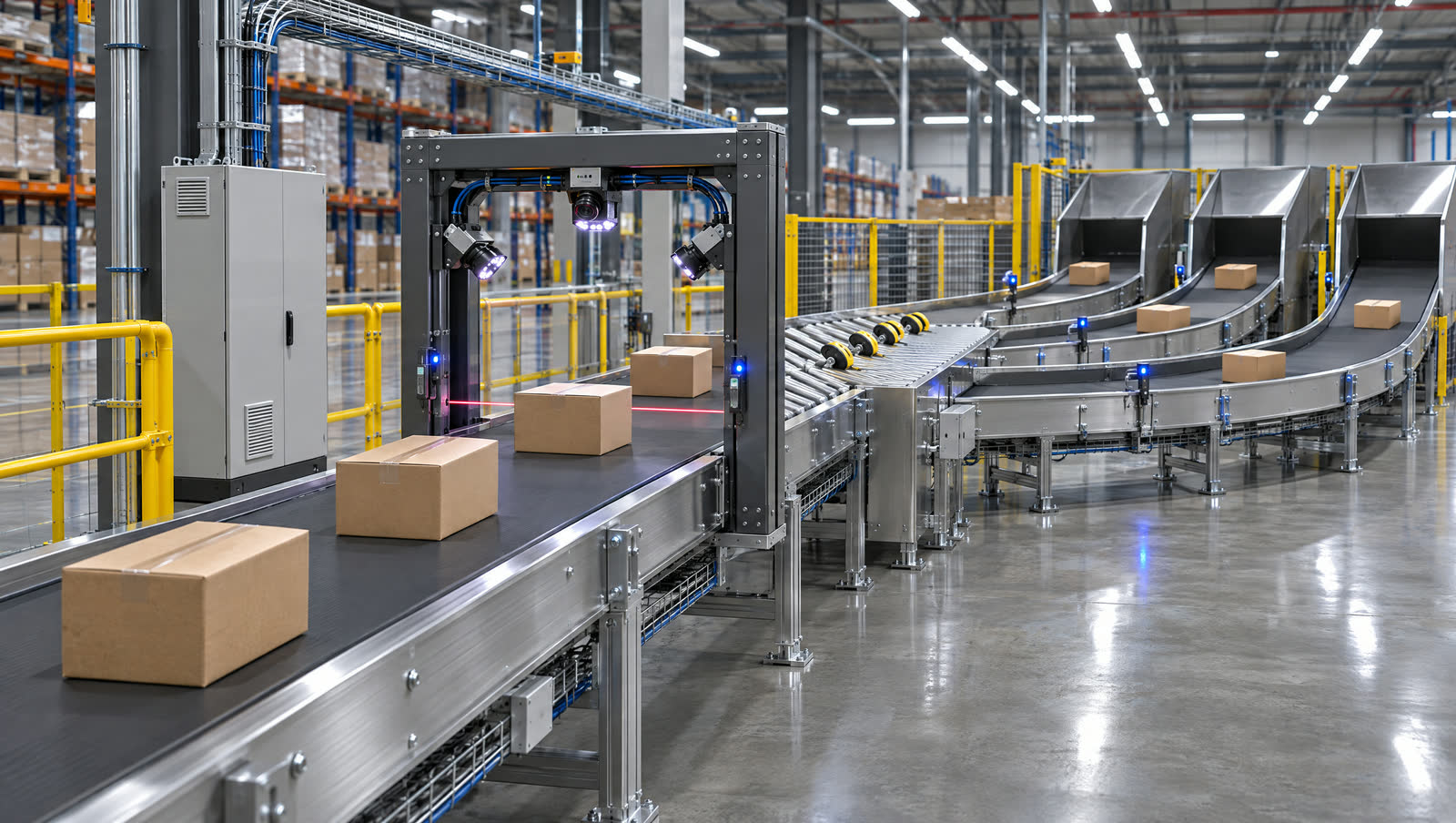
When you sell a conveying or sorting system, there are almost always two audiences. The client’s engineer understands the spec. But the person who approves the budget is a VP of operations, a finance manager or an owner, and they need to understand one thing: what the system does, and why it’s worth the investment.
Follow a single package
The simplest way to explain a complex system is to follow one item the whole way through. Instead of a flowchart with twenty boxes, the viewer sees a single package: it gets on the conveyor, is scanned, is diverted, and lands in its lane. Ten seconds in, they understand the principle.
Three angles every automation video needs
- A wide shot of the system. To grasp the scale and how the parts connect.
- A tight tracking shot of the item. To understand the process.
- A close-up of the smart moment. The scan, the divert, the sensor. That’s what sets you apart from a competitor.
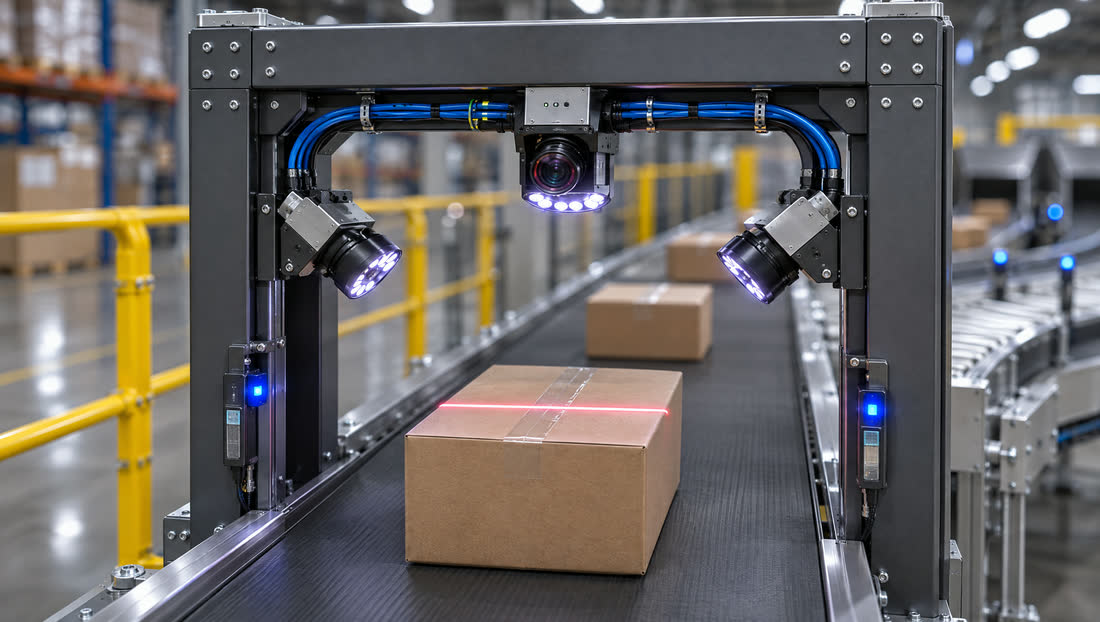
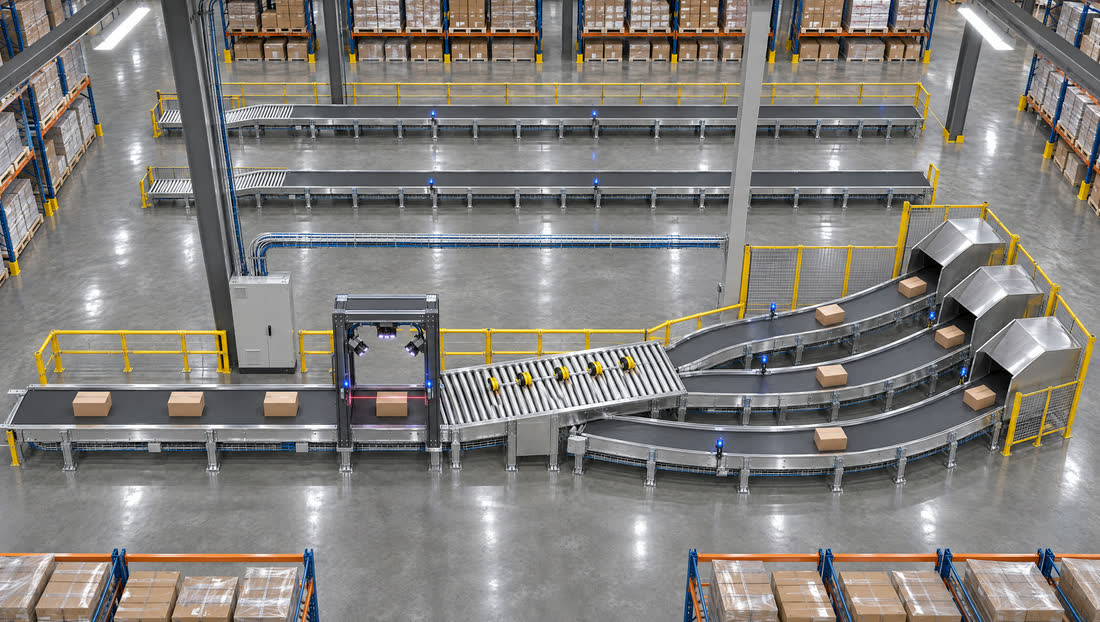
The close-up explains the technology. The top-down view explains the system.
Where AI helps, and where to be careful
AI tools are excellent at camera movement, lighting and the realistic look of metal, sensors and concrete floors. They are weaker at physics: in one of our attempts, a package simply flipped in mid-air above the diverter. So every clip is checked frame by frame, and a clip that doesn’t look credible is cut or produced again.
One more rule: no holograms and no science fiction. An industrial client wants to see equipment that looks like equipment, with bolts, safety rails and cables.
For training and trade shows too
The same materials serve more than sales: a loop for a trade-show screen, a training video for operators, and a short explainer for the website. Produced the right way, you end up with a content library rather than a one-off video.
Frequently asked questions
Can you visualize a system that hasn’t been built yet?
Yes. We work from your plan and spec, and can incorporate a photo of the client’s space to show the system where it will be installed.
How accurate is the visualization from an engineering standpoint?
The visualization presents the operating principle and the structure of the system based on your materials. It is not a substitute for an engineering drawing, and you approve it before publication.
Who is a video like this for?
Decision-makers who aren’t engineers, sales teams, distributors, trade shows and operator training.
Do you have a system that’s hard to explain in a slide deck? Send us a diagram or a photo, and we’ll come back with an idea for turning it into a video people understand in seconds.
Contact us